 Belgium
  Canada
  China
China  Germany
  Denmark
  Spain
Spain  France
  United Kingdom
  Croatia
  Ireland
  Italy
Italy  Japan
Japan  Korea
Korea  Netherlands
  Poland
  Romania
  Serbia
  Russian Federation
  Sweden
  Thailand
  United States
  Vietnam
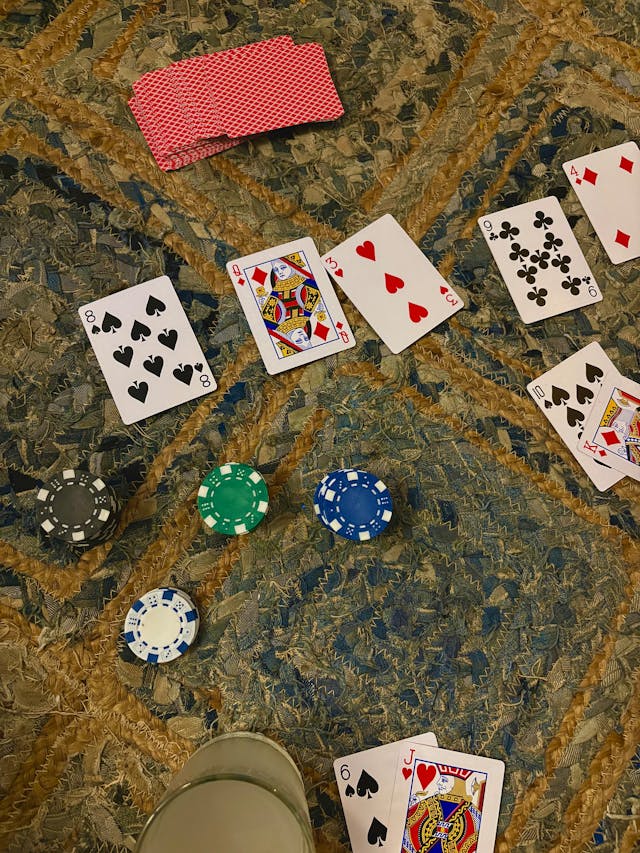

Caribbean Stud Poker has emerged as a popular choice for poker fans in recent years for two reasons. First, it’s familiar enough to other games for people to learn quickly; secondly, it’s nicely structured for those who don’t want the pressure of reading opponents.
In 2026, the game is quickly growing more popular across in-person casinos and mobile casino apps so, if you’re curious to find out what it’s all about, keep reading. Hopefully, by the end of this guide, you’ll a clear idea of how the game actually works and will be ready to take your seat at the table!
What makes Caribbean poker different
Caribbean Stud looks like a cousin of traditional poker, but it has its own personality. You’re not squaring off against everyone around you – instead, all decisions center on beating the dealer’s hand. There’s no bluffing, no posturing, and no tricky mind games. Instead, the appeal comes from straightforward decisions and transparent rules with an optional side bet that can turn a routine hand into a surprise payday.
The game uses a standard 52-card deck. Every hand begins with an ante. Once the cards come out, you’ll receive five face-down cards while the dealer sets out five cards, with one card exposed. That single upcard is your only hint about the dealer’s possibilities, but even a sliver of information can help shape your next move.
The flow of a hand
Once you’ve seen your cards you have the classic poker decision to make: fold or raise? Like in other games once you fold your round’s over. Raising means you make a second wager and stay in the hand – the most common move here is to double your bet.
The dealer then reveals the remaining cards. For the dealer’s hand to “qualify,” it has to contain Ace-King or better. When the dealer fails to qualify, your ante wins even money, and your raise pushes back to you.
When the dealer qualifies and beats your hand, you lose both wagers. When you win, the ante pays even money, and the raise pays based on a clear payout table tied to your hand strength.
Robust hands like flushes and full houses bring higher returns, which keeps every round capable of delivering a little drama.
A few guiding principles
Caribbean Stud isn’t a game built on complex theory. A few guiding principles offer most of the value you need.
It’s usually a good idea to raise whenever you hold a pair or something stronger. For anything weaker than an Ace-King, then folding tends to save you chips over time. In between, these two scenarios live the interesting decisions, where the game could go either way.
The big thing here is being allowed to see the dealer’s upcard. If your AK hand includes a Q or J that matches the dealer’s upcard rank, then raising is a smart move because block some of the dealer’s potential combinations.
If your kickers are low and don’t add any advantage, then again, it’s probably better to fold.
The game doesn’t require deep mathematical skill, but being consistent with your choices keeps your bankroll healthier. Caribbean Stud favors discipline over boldness.
Progressive jackpots
If you’ve played card games like blackjack, you’re probably familiar with a progressive side bet, and Caribbean Stud has this as an optional extra. Many people choose not to use it, but it’s a good idea to understand how it works so that you can determine whether it can help your routine or not.
The progressive bet usually pays for hands starting at a flush or better, with enormous payouts for rarer outcomes such as straight flushes or royal flushes. The jackpot grows through contributions from every player who wagers on it. That buildup is what creates those attention-grabbing figures displayed on the table screen.
The catch: the progressive bet pays based solely on your hand, not the dealer’s. You can lose the regular round yet still collect a large payout if your cards qualify. On the other hand, if you’re the type of player who prefers predictable results, the progressive might feel too volatile. Neither approach is wrong; it simply depends on your appetite for swings in fortune.
Table etiquette and setting
Casino crews running Caribbean Stud tables tend to be among the friendliest. The game moves at a measured pace compared with more frantic table games, so that dealers can chat and help new players without slowing the action.
Common in-person etiquette is to keep your chips in a neat pile and to place your bets within the marked circle. Like in other poker games, dealers expect you to keep your cards visible at all times.
Many players prefer the live-dealer online formats because the atmosphere is calmer, which makes it easy for newbies to get the hang of the game. Many online casinos and mobile casino apps in the USA host games that are designed to get new players comfortable, with easy-to-use interfaces. They also give you a nice mix of live atmosphere and the comfort of your own home.
Should you try it?
Like with any game that involves gambling, you should always play Caribbean Stud poker with caution. That said, you can try out these games for free on certain sites, which is a great way to get to know them.
Also, if you like games without showdowns against multiple opponents, then this game might be right up your street. The rules are easy, the game ticks along at a nice pace and, with a bit of patience you may find you’re fairly good at it!