 Belgium
  Canada
  China
China  Germany
  Denmark
  Spain
Spain  France
  United Kingdom
  Croatia
  Ireland
  Italy
Italy  Japan
Japan  Korea
Korea  Netherlands
  Poland
  Romania
  Serbia
  Russian Federation
  Sweden
  Thailand
  United States
  Vietnam
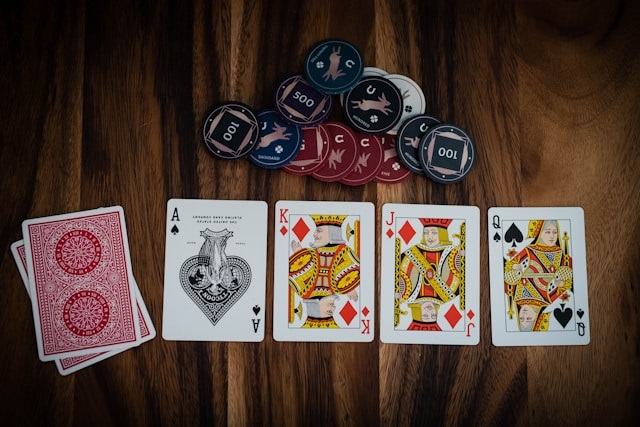

For anyone who plays online poker purely for the pleasure of it, the choice of game shapes the whole evening. A relaxed session at the tables is a bit like picking a film for a quiet night in: some players want the familiar comfort of a story they already know by heart, while others crave something busier, richer, and full of surprises. In poker terms, that decision usually comes down to two heavyweight favourites — Texas Hold'em and Omaha — and the difference between them says a great deal about what kind of leisure experience a player is after. The guiding question, then, is simple: which of these two games gives the more satisfying casual night?
Before weighing them up, it helps to know where these games actually thrive. The strongest rooms for UK players tend to be the ones that get independently ranked and reviewed on merit, with careful attention paid to bonus fairness, loyalty perks, and healthy player traffic — the sort of measured breakdown as seen on GR, which compares rooms such as CoinPoker, ACR Poker, and GGPoker and sorts them by player type, from curious beginners to mobile-first grinders. For a casual player choosing between Hold'em and Omaha, this kind of ranking matters because a busy, well-run room means fuller tables at all hours, more freerolls to dabble in, and rakeback that quietly softens the cost of a long session. Knowing which rooms actually deliver for UK players is the natural starting point before deciding which game to load up.
The Comfort of Hold'em
Return to the guiding question — which game makes for the better casual night — and Hold'em nearly always wins on familiarity. Two hole cards, five community cards, and a rhythm that almost anyone can pick up within a hand or two. It is the game beamed into living rooms during every televised final table, the one newcomers recognise before they have played a single pot.
That accessibility is precisely its leisure appeal. A player winding down after work can drop into a low-stakes Hold'em table and feel immediately at home. There is space to think, fewer cards to track, and a slower build of tension that suits a genuinely relaxed evening. The publisher's own bread and butter — No Limit Hold'em fundamentals, HUD stats, mental-game planning — all orbit this game precisely because it favours patience and steady reading of opponents. For the casual crowd, Hold'em is the warm bath: predictable in the best possible way, and endlessly re-watchable, hand after hand.
Why Omaha Turns Up the Volume
Now ask the same question of Omaha, and the answer flips on its head for a certain kind of player. Where Hold'em is the comfort watch, Omaha is the box-set binge — denser, faster, and impossible to half-follow. Each player receives four hole cards instead of two and must use exactly two of them, which sends the number of possible combinations soaring. Pots swell, draws collide, and the action rarely stalls. The full rules of Omaha hold 'em suit players who enjoy juggling several possibilities at once rather than settling into a single steady plan.
For leisure players who find Hold'em a touch sedate, that extra chaos is the whole point. Pot Limit Omaha, the most popular variant, produces bigger swings and more dramatic showdowns, which makes for lively, sociable tables where nobody is ever quite out of a hand. It is busier entertainment — more like a fireworks display than a slow sunset — and for many that intensity is exactly what a night off should feel like.
Skill, Chance, and the Feel of the Game
Part of the enduring charm of both games is the blend of judgement and luck woven into every hand. Academics have long debated where poker sits on that spectrum, and studies examining whether these are genuine games of skill suggest that decision-making carries real weight over time, even as short-term outcomes bounce around unpredictably.
For the casual player, that balance is what keeps things fresh. Hold'em lets skill accumulate quietly across many hands, so improvement feels earned and gradual. Omaha, with its tangle of draws, throws up bigger variance, meaning a beginner can still stumble into a monster pot against a seasoned regular. Neither is objectively more fun — it depends entirely on whether a player enjoys the slow-burn satisfaction of outthinking an opponent or the electric jolt of a four-card swing.
Matching the Game to the Mood
Circle back one final time to the guiding idea: the better game is simply the one that fits the mood. A player looking to unwind with a podcast on in the background and half an eye on the table will lean towards Hold'em, where the tempo forgives distraction. Someone hunting for a jolt of adrenaline on a Friday night will gravitate to Omaha, where every street can rearrange the whole hand.
Sensible leisure play also means keeping the entertainment side firmly in view. Research into the difference between casual and heavier play patterns underlines how much the healthiest sessions revolve around enjoyment, modest stakes, and knowing when to log off. Freerolls and low-buy-in tables suit that mindset perfectly, letting players sample both games without any pressure on the bankroll.
In the end, the Hold'em versus Omaha debate is less a contest and more a menu. One offers the reassuring rhythm of a favourite film; the other, the busy thrill of something new. The best casual players simply keep both on the watchlist — and pick whichever suits the evening ahead.